AI Adoption Strategies: Lessons From the World’s Biggest Companies
New research has revealed a major blind spot at the center of most AI rollouts.
General Assembly found that 88% of leaders believe their workforce is prepared for AI. But in the same survey, 61% had abandoned at least one AI initiative in the past year because of a lack of internal skills.
That disconnect shows where most AI rollouts fail: focusing too much on technology and not enough on people.
In a large Gallup survey, employees said that they don't know how to fit it into their work effectively. They have the tools, but they aren't connecting them to their daily tasks.
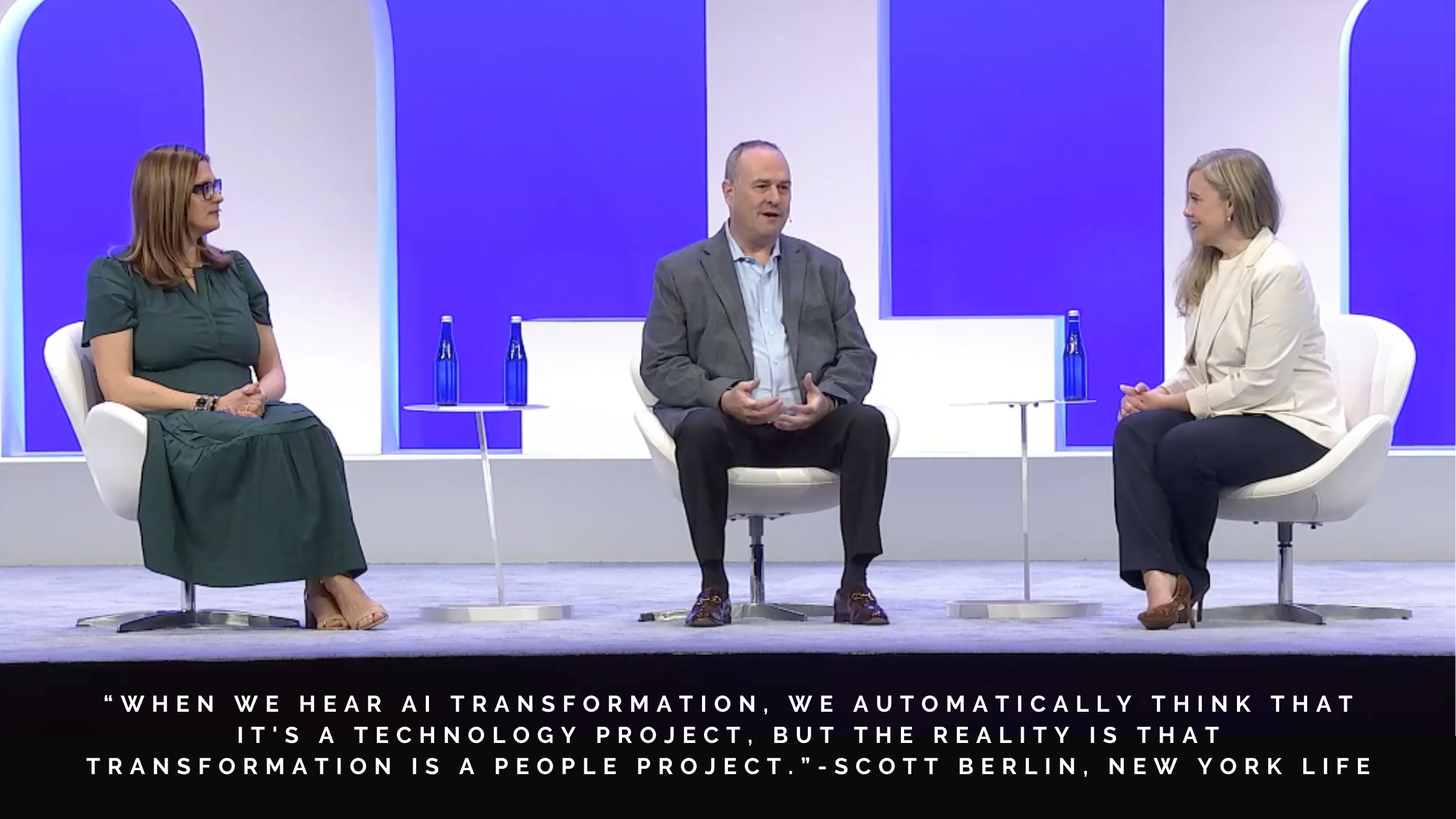
Image Source: IBM Think 2026 livestream
AI Transformation is a People Project
Some major organizations have already figured out how to solve that problem. At New York Life, leadership spent years exploring use cases before deploying the technology, according to Scott Berlin, president of group benefit solutions, who spoke on the topic at IBM's Think 2026 event.
Rather than just overlaying AI on existing processes and roles, they wanted it to become embedded. This was more complicated than distributing technology and generic training. It meant investing in workflow redesign, upskilling, and culture change.
"When we hear AI transformation, we automatically think that it's a technology project, but the reality is that transformation is a people project," Berlin said. "It's about elevating our people … and defining the interaction model between our people, our technology platforms, the new digital capabilities, the new digital agents that we're deploying into our workflow. So, it's really important that you take a step back and think about how you do that transformation from end-to-end, not just how do you build the technology?"
AI Needs To Apply to Daily Tasks
At Webucator, we saw this play out with a mid-size financial services firm with about 300 employees. They already had Copilot, Microsoft's AI tool, and they needed meaningful adoption.
We collaborated on an upskilling plan that started with a one-hour, company-wide session customized to their industry and their security guidelines. This was the first step towards getting 300 people speaking the same language and understanding Copilot's capabilities.
Then, we worked on integration into roles, work processes, and culture. For each department, our instructor conducted a needs assessment through live interviews: What do you do every day? Where does work slow down? How do you collaborate? Which processes are repetitive? What templates do you use?
Then we built workshops from scratch, integrating real tasks, documents, and templates. Each team, from finance to operations to project management and beyond, attended a session that was specific to their goals.
The groups went back to work knowing exactly what to do, and they had a shared plan for implementation. This isn't the end, though. After they've used it for awhile, they'll come back to learn more strategies and advanced features.
This people-first model is working really well, not just for this company, but for many of the most successful corporations in the world.
Achieve Speed and Scale By Solving Backwards
At The Walt Disney Company, priority is more on people than technology. At IBM Think 2026, Susan Doniz, chief information and data officer, shared her approach to harnessing innovation with speed.
"I want to talk about dispelling the myth that innovation is only about new product," Doniz said. "Yes, innovation is exciting … but innovation can be very much in the back office in terms of how you work, how you deliver products to scale and at speed. What is super important is putting the customer, the employee, first and then solving backwards."
So, as you roll out AI, look across the enterprise and ask: What do our people need, and how can we think backwards from there? From there, you can start building your roadmap for a successful adoption plan.
Let our experts help build your AI Adoption Roadmap. Schedule a free consultation today.